At first glance, a borescope is a simple idea: a small camera or optical system that lets you see inside a component without taking it apart. In practice, aviation borescope work is demanding. Inspectors need consistent image quality in difficult lighting, control that allows precise viewing angles, and equipment that holds up to repeated use around sharp edges, residue, and tight access paths. That is why aviation-grade borescopes exist. They are built to support flight-critical inspections where clarity, durability, and documentation are non-negotiable. Companies like USA Borescopes serve maintenance organizations by offering inspection tools designed to meet the expectations of aviation maintenance workflows.
Why Not All Borescopes Are the Same
Many industries use borescopes, from plumbing to automotive to general industrial maintenance. Those applications can involve tight spaces, but the inspection stakes and environment differ from aviation. In aviation, borescope inspections can influence decisions about engine serviceability, removal, repair scheduling, and return-to-service confidence.
A consumer or general industrial scope may work fine for simple viewing in clean environments. Aviation maintenance often requires more. Hot section inspection surfaces are reflective and heat-tinted. Deposits and discoloration can hide fine crack lines. Access ports are small, and internal routing often requires careful articulation. Documentation must be clear enough to support engineering review and quality audits.
Aviation-grade borescopes are built around these needs. The goal is not just to see something, but to see it clearly, repeatedly, and in a way that supports consistent decisions.
Design Requirements for Aviation Use
An aviation-grade borescope is defined more by how it performs in real maintenance conditions than by a label on a spec sheet. Several design requirements consistently matter in aviation environments.
Reliable image clarity in difficult lighting
Aviation inspectors need surface detail, not just a general view. Many defects are subtle at first. Fine cracks can appear as thin lines that are only visible at specific angles. Early oxidation can show up as a change in texture, not just color. Coating distress can look similar to staining unless the image is sharp enough to show surface boundaries.
An aviation-grade system is designed to deliver usable clarity in these conditions. That includes optics or sensors capable of great detail, as well as lighting systems that can be adjusted to reduce glare and increase contrast.
Precision control and articulation
Many aviation inspections require viewing edges, tips, and transition zones from more than one angle. A scope that cannot be positioned precisely can leave blind spots. Aviation-grade systems tend to prioritize articulation responsiveness and stable tip control, helping inspectors hold a view long enough to capture documentation.
Durability for tight access and frequent use
Aviation maintenance is not gentle on tools. Borescope probes are inserted repeatedly into components with sharp transitions and limited clearance. Oil residue, carbon deposits, and vibration can affect performance. Aviation-grade systems typically emphasize reinforced insertion tubes, rugged connectors, and protective housings to reduce downtime and maintain consistent performance over time.
Documentation and data management
Aviation inspections are rarely judged solely by what the technician saw in the moment. They are judged by what can be documented and reviewed. Aviation-grade borescopes often support reliable still capture, video recording, and data transfer so findings can be stored, shared, and compared over time.
Key Features That Distinguish Aviation-Grade Systems

The features below are typically what separate aviation-grade borescopes from standard inspection tools. While specific configurations vary, these are the practical differences maintenance teams notice in daily use.
Image Quality and Optics That Support Defect Recognition
Aviation inspections involve surfaces where minor differences matter. High resolution alone does not guarantee a better inspection, but it helps when paired with good optics and stable lighting.
Inspectors benefit from:
- Sharp focus at close range for detailed surface assessment
- Clear performance under low-light conditions
- Minimal distortion when viewing edges or curved surfaces
- Smooth video output that reduces motion blur during sweeps
Defect recognition often depends on texture and boundary definition. For example, a true crack tends to show a consistent line that remains visible across angles. A stain or reflection may shift or disappear when the camera moves or the lighting changes. Better image quality makes these differences easier to confirm.
Lighting Control for Reflective and Heat-Tinted Surfaces
Inside engines and gearboxes, lighting can either reveal defects or hide them. Reflective turbine blades can create glare that washes out detail. Dark cavities can absorb light, leaving edges and small features in shadow. Aviation-grade systems tend to include strong illumination with adjustable control so technicians can tune brightness for the surface being inspected.
Practical advantages of lighting control include:
- Reduced glare on shiny metal surfaces
- Improved contrast on heat-tinted or coated materials
- Better visibility on edges, cooling holes, and fillets
- More consistent photos for documentation and review
Lighting matters even more when inspections must be repeatable. If one inspection uses harsh lighting and another uses softer lighting, images can appear different even if the component has not changed. Good control helps standardize results.
Probe Diameter Options for Real Access Constraints
Aviation inspection access points vary. Some require very small diameter probes, especially in compact engine or gearbox layouts. Other inspections allow larger probes that may provide stronger durability or different viewing accessories. Aviation-grade systems typically offer multiple diameter and length options so maintenance organizations can match the tool to their fleet.
Probe diameter is not only about fitting through a port. It affects navigation, stability, and how easily the inspector can steer the tip to view specific surfaces. The best choice is usually the one that fits common inspection tasks reliably rather than the smallest probe available.
Articulation and Handling That Enable Complete Coverage
Many inspections fail because the inspector cannot position the camera properly. Aviation-grade systems prioritize articulation that is smooth, predictable, and capable of holding position. When the camera tip can be steered reliably, the inspector can view blade edges, platforms, gear teeth, and other critical surfaces from multiple angles.
Handling also matters. Controls should allow steady movement without abrupt shifts. This helps reduce motion blur and improves still capture quality. When the inspector can stabilize the view easily, documentation becomes clearer and more useful for review.
Durability and Temperature Resistance for Aviation Conditions
Aviation inspections can expose scopes to challenging conditions. Even if the component is not at operating temperature, hot section areas can retain heat. Residue and deposits can be abrasive. Tight paths can scrape insertion tubes if the technique is not perfect. Aviation-grade systems are designed with these realities in mind.
Features that support durability include reinforced insertion tubes, rugged camera heads, and connectors designed to tolerate frequent setup and transport. Strong durability is not only about tool lifespan. It also protects inspection accuracy because worn probes and damaged camera heads can degrade image quality and articulation.
Documentation Features That Support Maintenance Records
Aviation maintenance relies on defensible records. Images and video clips are often required for engineering review, quality checks, and trend monitoring. Aviation-grade borescopes typically make documentation simpler and more reliable.
Useful documentation capabilities include:
- Still image capture with consistent resolution
- Video recording for context sweeps
- Easy file transfer and organization
- The ability to label or sort by asset and inspection date
For many organizations, documentation is the deciding factor between basic inspection tools and aviation-grade systems.
Maintenance teams comparing capabilities and configurations can review available options through the USA Borescopes product catalog, which provides a helpful starting point for understanding typical aviation-grade feature sets and probe configurations.
Long-Term Value of Aviation-Specific Tools
The value of aviation-grade equipment is often easiest to see over time. A cheaper scope that produces inconsistent images can create repeated inspections, disagreement about findings, and unnecessary removals. A durable, high-clarity system reduces uncertainty and supports faster decisions.
Aviation-grade tools also support training and standardization. When images are clear and documentation is consistent, maintenance teams can build baseline libraries and improve defect recognition across technicians. This reduces variation and helps improve inspection quality across shifts and sites.
For organizations managing multiple aircraft types or high inspection volumes, tool reliability matters. A scope that fails frequently or degrades in image quality creates delays and costs that exceed the initial price difference.
Aviation-Grade Means Built for Flight-Critical Inspections
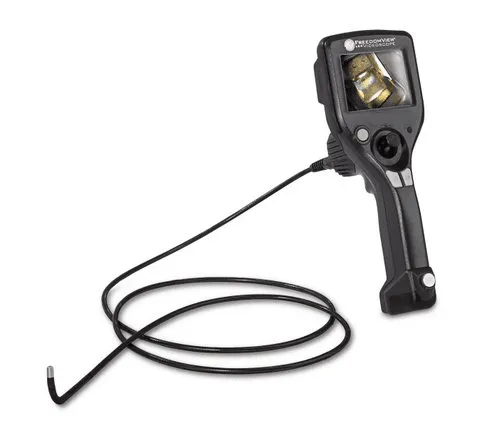
An aviation-grade borescope is different because aviation inspections demand more than basic visibility. They require clarity under difficult lighting, precise control in tight access paths, durability for frequent use, and documentation that supports defensible decisions. These factors help maintenance teams detect defects earlier, reduce uncertainty, and plan maintenance more effectively.
From engines to gearboxes to confined access points, aviation inspections require equipment that performs reliably in day-to-day maintenance conditions. USA Borescopes offers inspection solutions designed for repeatability and real-world use. Maintenance organizations that want guidance on selecting a configuration aligned with their inspection needs can contact USA Borescopes to discuss options.
About the Author
The author is an aviation inspection specialist with extensive experience in remote visual inspection and maintenance documentation standards. They focus on practical inspection techniques, defect recognition, and equipment selection factors that improve consistency across maintenance teams. Their guidance is independent and grounded in real maintenance environments where accurate visuals and repeatable processes are essential.