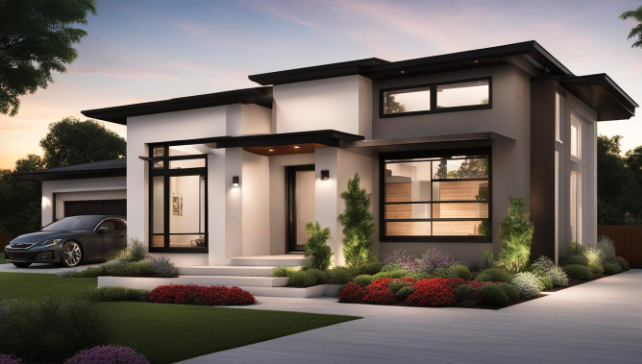
When people think of Dubai, they often picture luxury hotels, gleaming skyscrapers, and supercars cruising down Sheikh Zayed Road. But underneath the glitz lies a bold and strategic experiment in urban design. Dubai isn’t just building a city—it’s building a smart city. One that uses data, automation, and design thinking to redefine how people live, move, and interact with their environment.
In the race toward smarter urban living, Dubai has emerged as a leader not by accident, but by design. Its leadership has made urban innovation a national priority. From blockchain-based government services to AI-integrated traffic systems and sustainability-focused infrastructure, Dubai is transforming itself into a living lab for the future. And for investors and residents alike, that transformation brings both convenience and opportunity.
The foundation of Dubai’s smart city vision lies in its infrastructure. The city has invested heavily in high-speed connectivity, digital ID systems, and intelligent utilities. Government services are available online and through mobile apps—residency applications, bill payments, licensing, and even legal procedures can be handled digitally. This kind of seamless governance makes life easier for residents while also making Dubai more attractive for global professionals and entrepreneurs.
See also: What are the Types of Postcards in Real Estate?
Transportation is another area where the smart city strategy shines. The Roads and Transport Authority (RTA) has rolled out intelligent traffic systems, autonomous vehicle trials, and even plans for aerial taxis. The Dubai Metro is fully automated, and AI is used to monitor congestion and optimize public transit flow. These technologies don’t just sound futuristic—they actually reduce commute times, lower carbon emissions, and improve quality of life.
Energy and sustainability are also key pillars of the smart city plan. Dubai aims to derive 25% of its energy from clean sources by 2030, with the massive Mohammed bin Rashid Al Maktoum Solar Park leading the charge. Smart grids and green building codes are already in place, and many new communities are designed with walkability, recycling, and low-energy systems in mind. These environmental commitments aren’t just good for the planet—they’re good for long-term property values.
For real estate investors, the smart city strategy is especially important. Properties in tech-forward, green-certified communities tend to perform better over time, both in terms of resale value and rental yield. Areas like Dubai South, Expo City, and parts of Al Furjan are being built from the ground up with technology and sustainability in mind. These zones are becoming magnets for young professionals, families, and digital nomads who prioritize convenience, efficiency, and community living.
One of the ways Dubai is accelerating smart urban growth is through off-plan real estate development. Unlike resale properties, off-plan units are sold before construction is complete. This allows developers to incorporate the latest technologies and design principles from the outset. Many of the most advanced smart communities are being offered as Dubai off plan projects, giving early investors a front-row seat to the future of urban living. From smart thermostats and voice-controlled lighting to centralized waste management and app-controlled parking, these features are rapidly becoming standard in off-plan developments.
This is where innovation meets opportunity. Buying into a smart community early allows investors to secure prime units at favorable prices—before demand pushes values up. And with flexible payment plans, reduced upfront costs, and high ROI potential, off-plan properties are a strategic way to invest in Dubai’s urban evolution. As the city continues to expand, the areas designed around smart infrastructure will likely see stronger growth and rental demand than traditional neighborhoods.
Living in a smart city also means better security and quality of life. Dubai has integrated facial recognition, smart surveillance, and predictive policing tools into its public safety systems. Residential communities benefit from 24/7 monitoring, controlled access, and connected emergency services. Residents can track everything from air quality to maintenance requests through digital dashboards, making home management faster and more transparent.
These innovations are a major draw for global citizens who are looking not just for luxury, but for intelligent living. And that’s where Dubai’s residency incentives come in. Investors who purchase property valued at 2 million AED or more may qualify for the Dubai Golden Visa, a 10-year residency permit that can be renewed indefinitely. This visa is particularly appealing for those seeking to relocate, retire, or expand their businesses in the UAE. It allows visa holders to live, work, and study in the country—and sponsor family members—without needing an employer.
Residency aside, many newcomers are also drawn by Dubai’s digital ecosystem. Startups and tech companies thrive in free zones like Dubai Internet City and DIFC. These areas offer full foreign ownership, repatriation of profits, and no corporate taxes. With high-speed internet, government-backed accelerators, and a supportive legal framework, Dubai is quickly becoming a top choice for remote workers, tech founders, and digital creatives looking to combine business with lifestyle.
But navigating a new market—even one as efficient as Dubai’s—still requires expert guidance. From selecting the right community to negotiating terms and completing documentation, working with a firm that specializes in Dubai real estate services ensures a smoother and safer experience. These professionals handle legal due diligence, developer research, mortgage facilitation, and title registration. For first-time investors or foreign buyers, having the right advisors makes all the difference.
It’s also essential to understand the city’s zoning and development pipeline. Certain areas are earmarked for massive public investment, including metro expansion, cultural institutions, and green corridors. These plans will directly impact property appreciation and rental yield. That’s why consulting with a knowledgeable Dubai real estate agent is a smart first step. They not only help you find a home, but also evaluate long-term potential based on infrastructure trends, demographic shifts, and developer reliability.
Dubai’s smart city evolution is more than a branding exercise—it’s a multi-billion-dirham initiative backed by technology, policy, and urban design. It’s also a blueprint for the future of global cities. As urban centers worldwide grapple with congestion, pollution, and aging infrastructure, Dubai is offering a model that is agile, adaptive, and forward-thinking.
For investors, homeowners, and future residents, this transformation means more than just convenience—it means long-term value. Properties in smart communities will attract better tenants, command higher resale prices, and offer more efficient living for years to come. And with so many new developments incorporating these innovations from day one, now is the time to get involved.
Whether you’re seeking a high-tech home, a solid investment, or a launchpad into a smarter way of life, Dubai’s real estate market delivers on all fronts. The city’s commitment to innovation, coupled with its openness to global investors, makes it one of the most promising urban landscapes in the world. This isn’t just the future of real estate—it’s the future of how we live.